

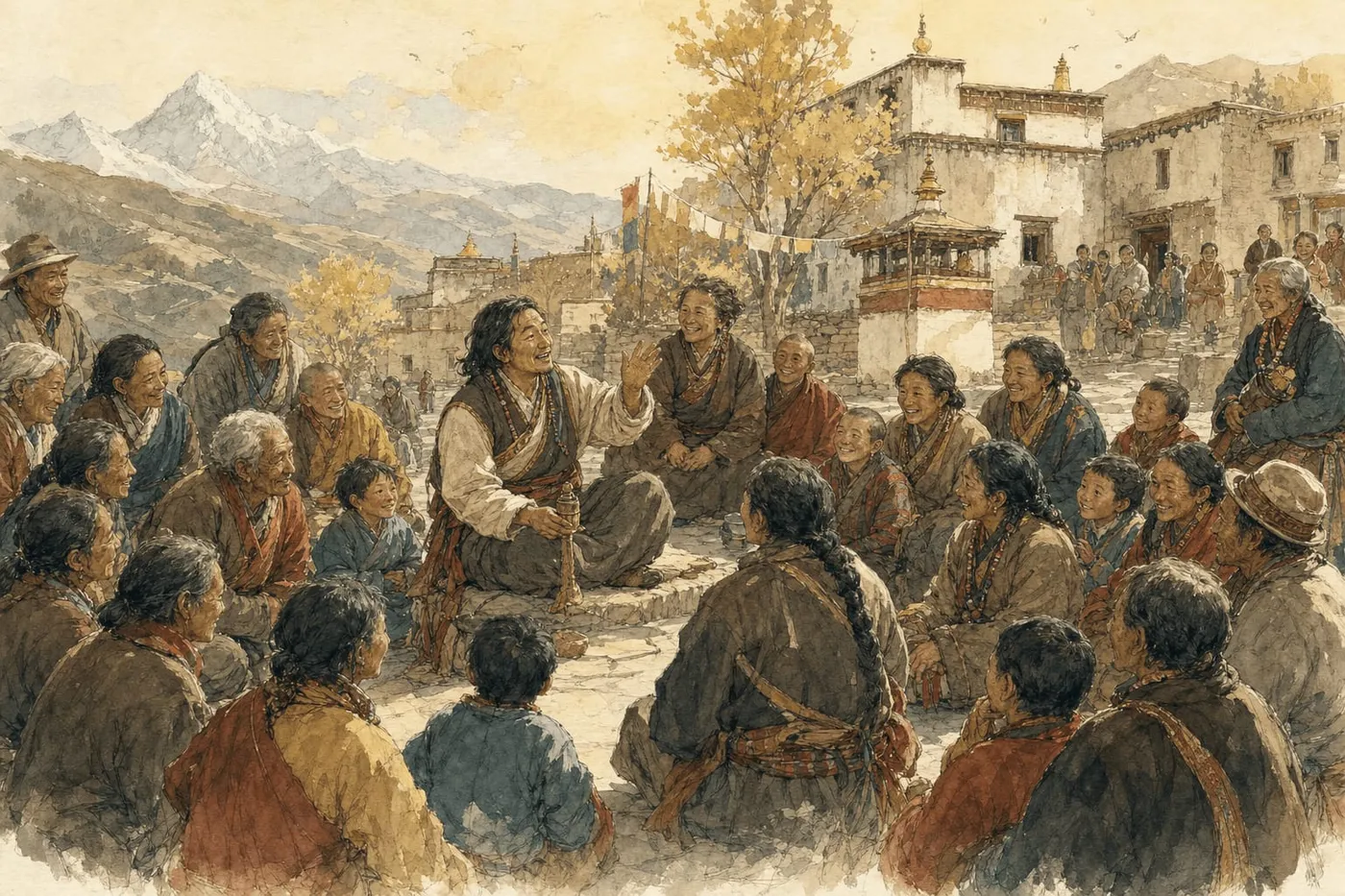
Some of these stories are two and a half thousand years old. None of them were written for scholars.
They were told out loud, to ordinary people — farmers, merchants, parents, the grieving, the pig-headed, the anxious — because a story goes where an instruction cannot. Nobody remembers being told that spiritual development requires gradual practice. Everybody remembers the rich man who wanted the third floor of his house without the first two.
That is why they are still here. Not because they are venerable, but because they keep turning out to be about us: the argument replayed at three in the morning, the message sent too quickly, the gift left unopened, the grief that cannot believe it is not unique. The circumstances have changed completely. The people in them have not changed at all.
Each is told in a few minutes, with the source it comes from and the tradition that carried it.
21 August 2026
A rich man orders a three-storey house, then tells the carpenter to skip the foundation and the lower floors and build only the beautiful top one. Transformation has foundations: nothing worth having is built from the top down.
more
14 August 2026
The Dhammapada opens by quoting the grievance itself — he abused me, he struck me, he robbed me — before saying anything about it. Hatred offers a deal it never pays: the fire is passed hand to hand, and every pair is burned.
more
7 August 2026
Teachers kept passing through Kesamutta, each certain and each contradicting the last, until the townspeople asked how anyone is supposed to tell. The answer was not "believe nothing" but: look at what a thing grows in you.
more
31 July 2026
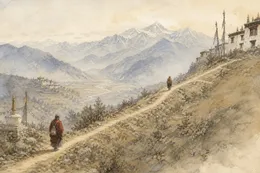
Atisha brought a famously difficult cook with him to Tibet and declined every offer to replace him: without the man, he had no one to practise patience on. The difficult person is not an obstacle to the practice but the equipment.
more
24 July 2026
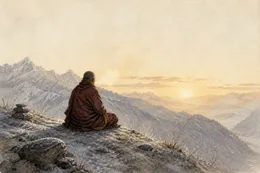
A monk sits at the foot of a tree and does one unremarkable thing: he breathes in, and knows he is breathing in. The breath was chosen because it is always already happening and requires nothing to begin.
more
17 July 2026
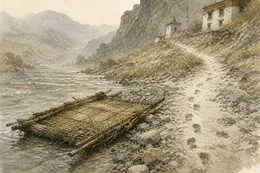
A traveller builds a raft from grass and branches, crosses a dangerous river — and then, the Buddha asks, would he hoist it onto his shoulders and carry it inland? A raft is for crossing with, not for holding.
more
10 July 2026
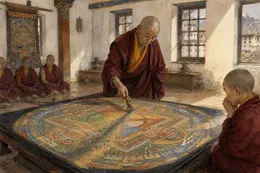
Monks spend weeks laying coloured sand into a mandala, then draw a vajra through the middle and pour it into running water. The sweeping is not a comment on the work; it is the completion of it.
more
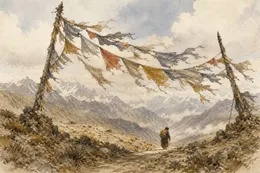
3 July 2026
The Kadampa masters tested a practitioner not by how long he could sit but by what happened when someone praised him. Gain and loss, praise and blame: whoever can be raised by one can be flattened by the other.
more
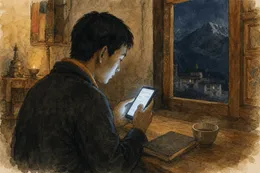
26 June 2026
Prince Abhaya comes with a trap, and the Buddha answers with a test of three parts — is it true, is it beneficial, is this the time — then asks about a child with a stone in his mouth. Accuracy is not the same as permission.
more
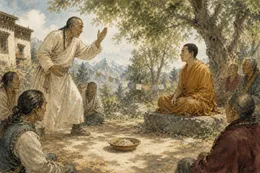
19 June 2026
The brahmin Akkosaka arrives shouting, and the Buddha asks him what happens to food a guest declines to accept. It stays with the one who offered it — receiving is not the same as accepting.
more
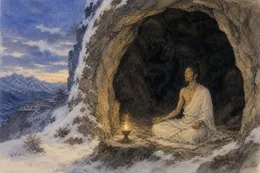
12 June 2026
Milarepa returns to his cave and finds it full of demons; commanding, fighting and teaching all make them larger, until he stops pushing and puts his head in the largest one's mouth. The struggle against the feeling is what the feeling eats.
more
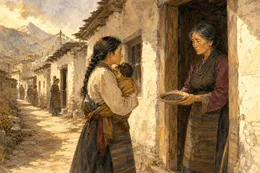
5 June 2026
Kisa Gotami, carrying her dead child, is sent to find a mustard seed from a house that has never known death — and goes from door to door discovering that no such house exists. Grief does not set you outside the human street.
more
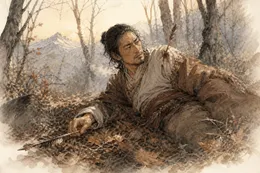
29 May 2026
A man struck by an arrow lies in the forest and begins to wonder: who shot it, why me, it will be worse by morning. The first arrow is fired by the world; the second we fire into our own wound.
more
These retellings are drafts, awaiting review by the monastery.