
The Raft
July 17, 2026
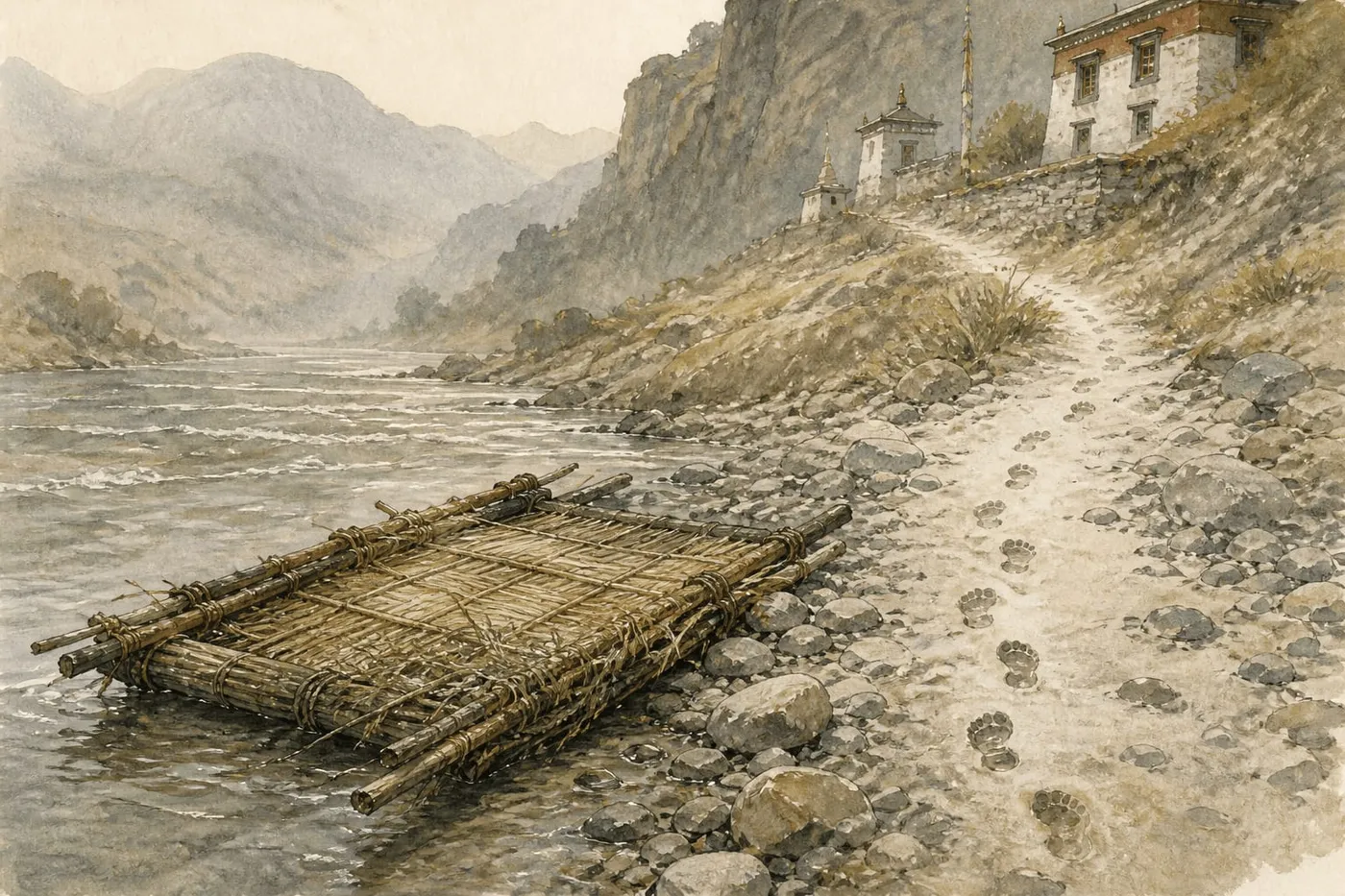
A man travelling comes to a wide river. The near bank is dangerous, the far bank is safe, and there is no bridge and no ferryman. So he gathers grass and sticks and branches, binds them together, and pushes off, working with hands and feet until he touches the other side.
Here the Buddha stopped and asked the monks a question about the man’s next move. Suppose he thinks: this raft has been extremely useful to me. Suppose he lifts it onto his head, or hoists it onto his shoulders, and walks inland with it, carrying it wherever he goes.
Would that be a man doing the right thing by the raft?
No, they said. Obviously not.
What he ought to do, the Buddha said, is beach it, or leave it in the shallows, and go on. And then he turned the image somewhere unexpected: understand that my teaching is like the raft. It is for crossing with. It is not for holding.
If that applies to the dharma itself, it is worth asking what it might apply to.
We do the same thing today in an argument that stopped being about anything an hour ago. At some point the question on the table was settled or abandoned, and what is being defended now is the position — the fact that it was yours, and stated in front of people. The raft is on your shoulders and you are twelve miles inland.
Look at how you think about a colleague, formed in one bad week nine years ago and never revisited. The story about your family that explains everything and has never once been tested. The account of yourself you built at twenty-three, which got you across something real, and which you have been carrying ever since.
Any of them may have been a good raft. That is not the question.
Find one thing you are defending today. Then ask: am I still using this?
Or only carrying it?
Explore further: Education & Intellectual Training · Madhyamaka — the Middle Way