

Why Seven
Not a Curriculum
The seven pillars are not seven subjects a monk works through and completes. They are seven aspects of one life, going on at once: study, meditation, ritual, community, compassion, simplicity, and the question of how any of it meets the world outside.
A monk in his eleventh year of Madhyamaka is also sweeping a courtyard, also sitting with an elder, also learning his part in the Cham. The divisions are ours, made so the thing can be described.
How to Read These Pages
Each pillar has its own page, and they can be read in any order. Some are about what is taught, some about what is done, and some about what happens to a person over twenty years of doing it.
Where the monastery's account and the written record differ, or where a date is not established, the pages say so rather than smoothing it over.
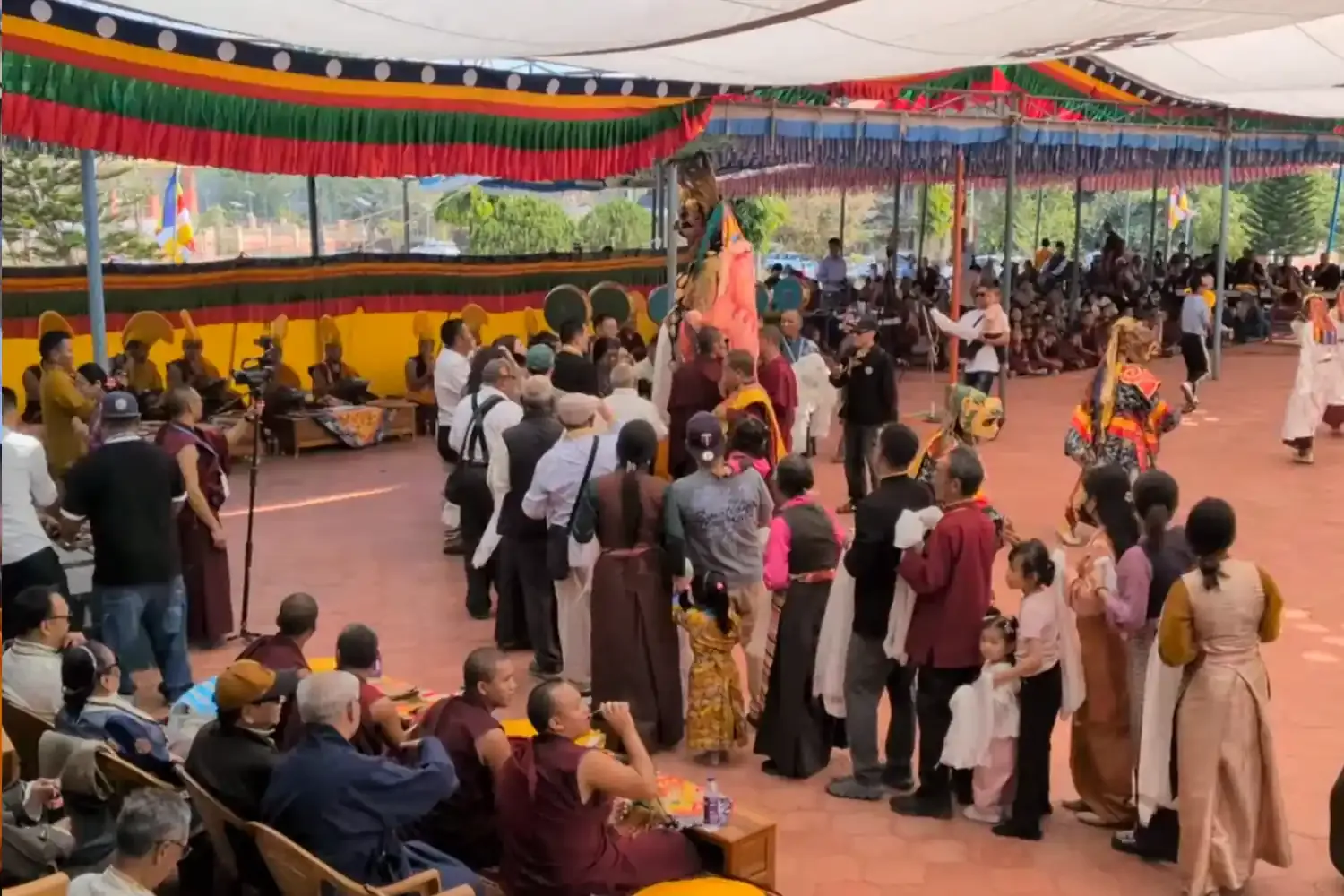
A Living Monastery
In a world increasingly driven by speed, comparative performance, and technological saturation, the monastery stands as a quiet counter-model — a living experiment in life beyond the ego. The daily life and spiritual responsibility of our community are anchored in seven pillars, together forming a complete ecosystem designed to train the mind, soften the heart, and carry a timeless lineage of wisdom to future generations.
The Seven Pillars
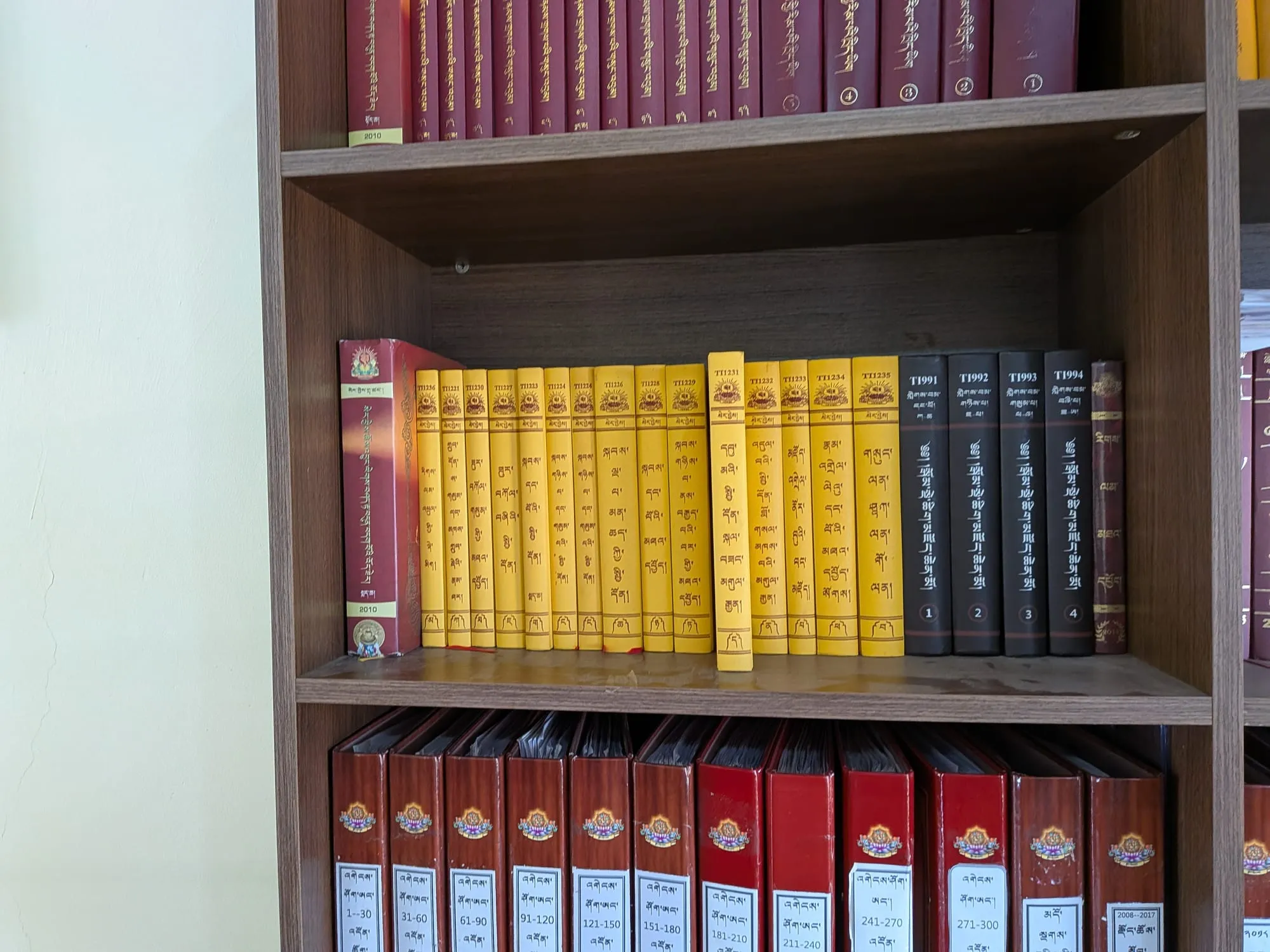
Education & Intellectual Training
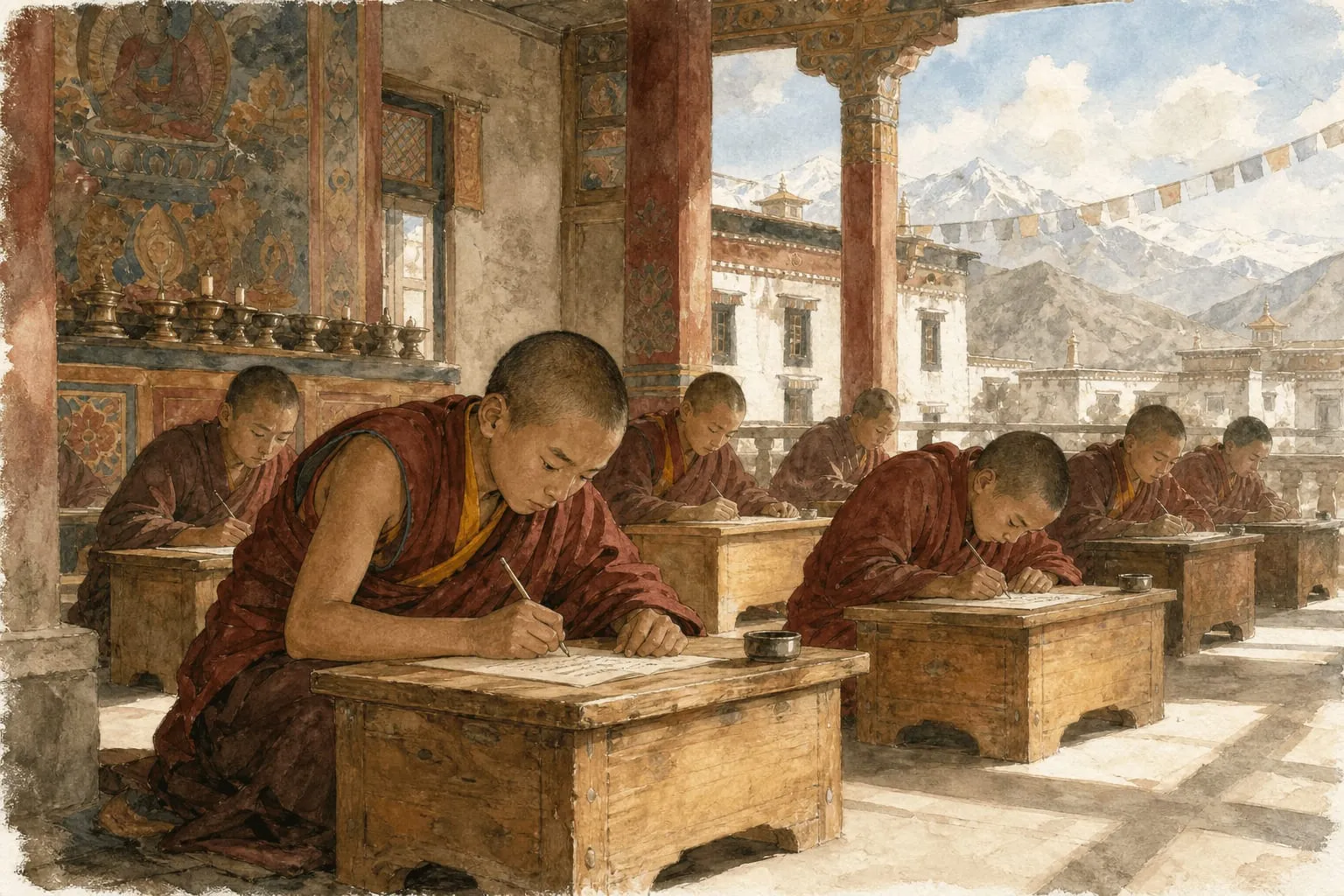
Monastic education here is a rigorous, decades-long journey of cognitive refinement. Young monks study the 15 Great Texts (Gzhung Chen Bco Lnga) of the Gelug curriculum, covering logic, epistemology, and Middle Way philosophy. In the debate courtyard, knowledge is not passively memorized but actively tested through dialectical reasoning — using formal logic to deconstruct rigid assumptions and build analytical clarity.
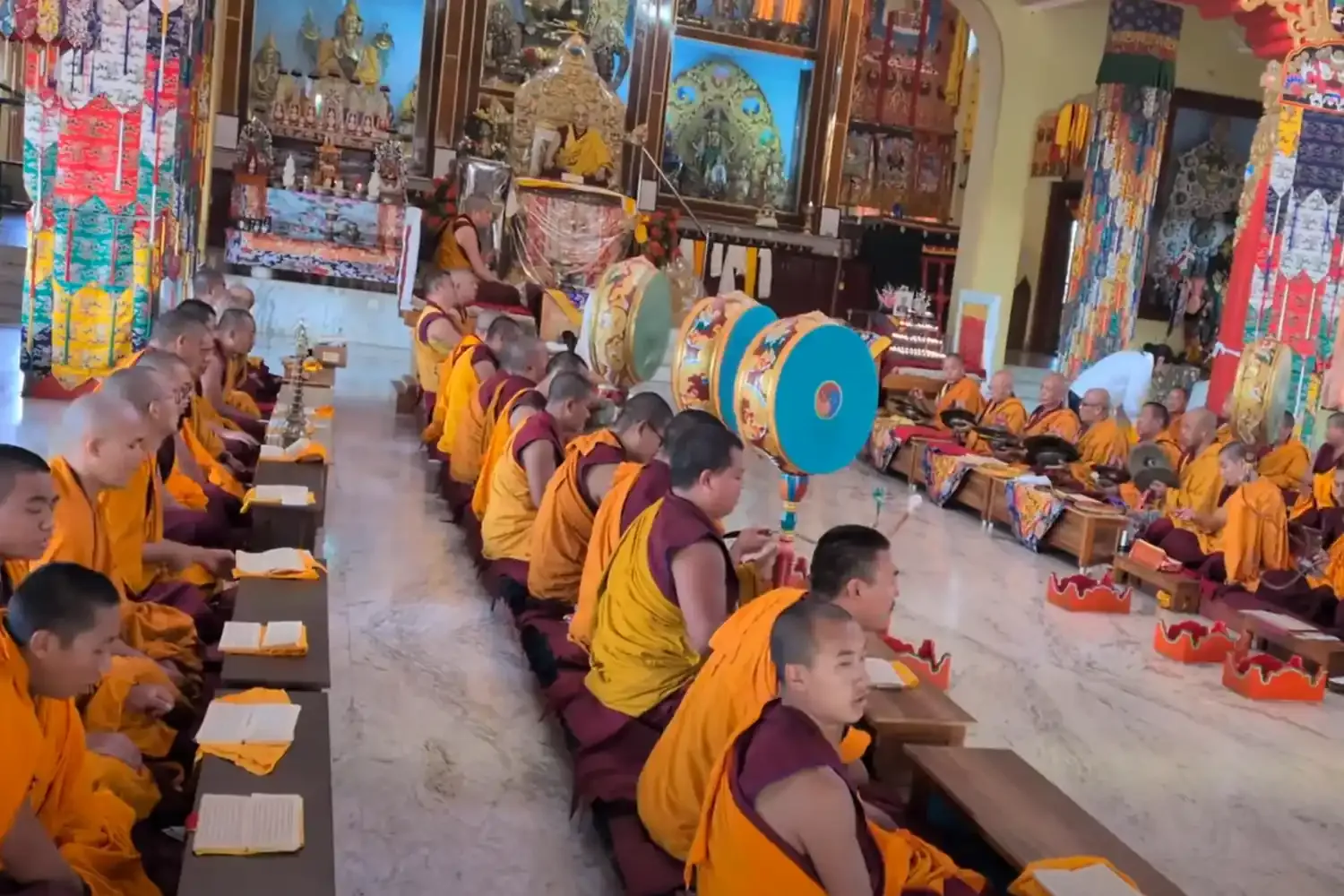
Meditation & Inner Practice
Beyond intellectual study, the monastery is a sanctuary for direct experiential observation. Daily rhythms are structured around analytical and stabilizing meditation that allows the mind to investigate the nature of experience. Cultivating mindfulness and quiet absorption, we learn to recognize thoughts as passing conditions rather than solid, defining identities — real relief from performance pressure and mental reactivity.
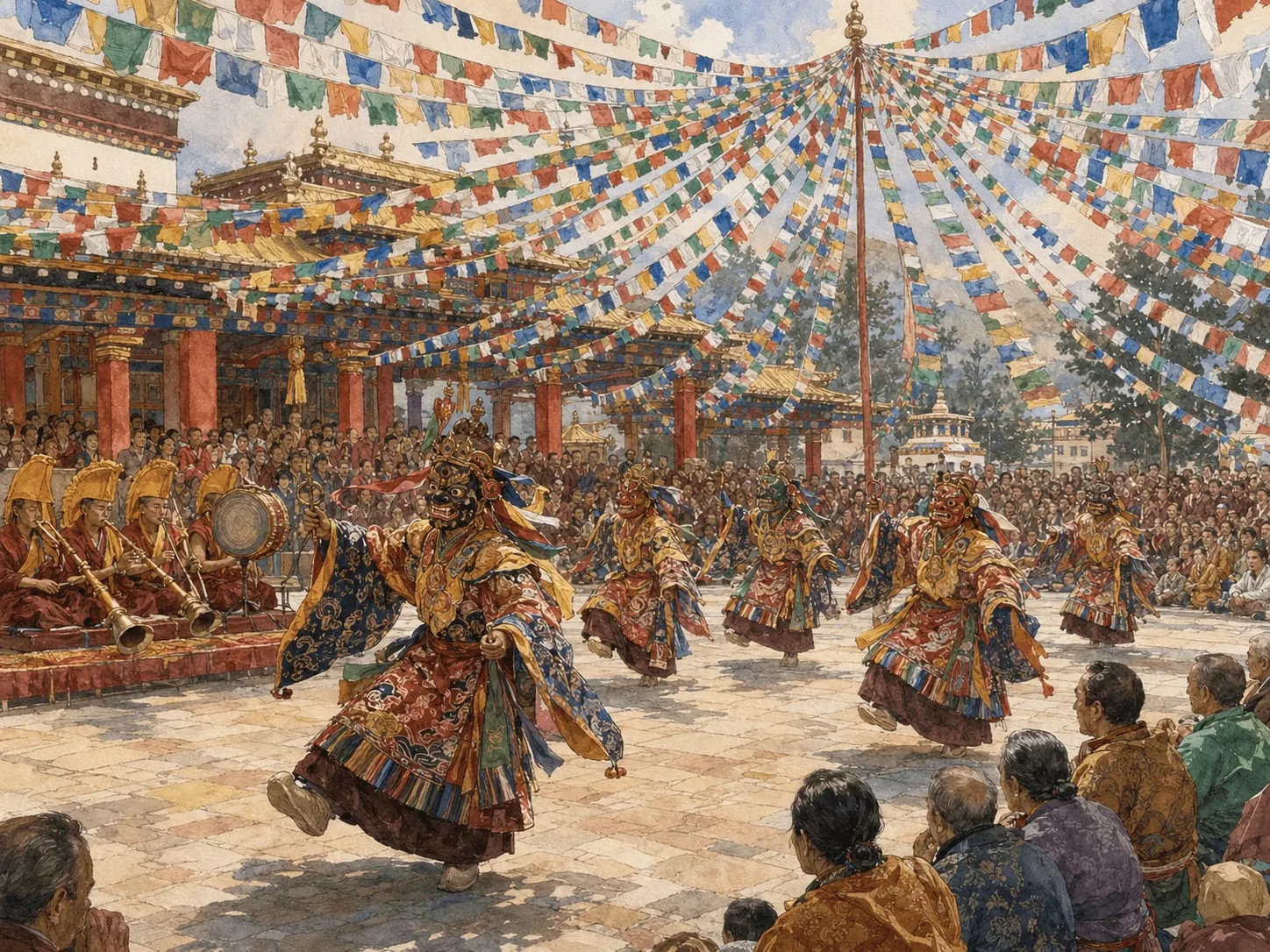
Rituals & Sacred Arts
Rituals are not mere performance, but metaphysics in motion. Monks train meticulously in sacred chanting, thangka painting, the creation of intricate sand mandalas, and the highly specialized Yak Zang Cham mask dance. These arts are physical, spatial representations of internal transformation — embodying compassion, impermanence, and the symbolic dismantling of egoic grasping.
Community & Daily Life
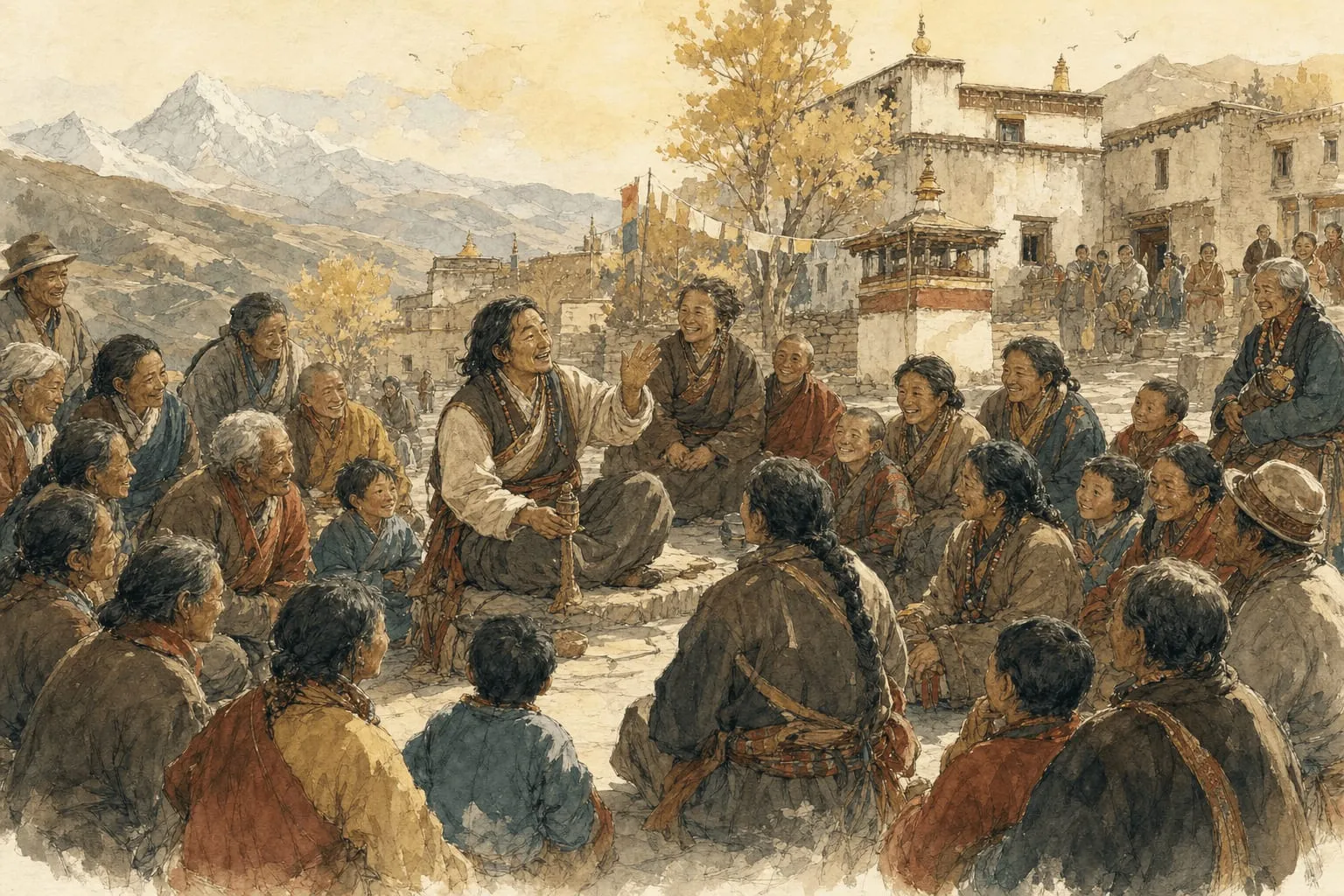
A community of over 300 monks is a daily exercise in lived interdependence (pratītyasamutpāda). Every aspect of shared life — from rotating kitchen duties to maintaining common spaces — is an extension of mindfulness and service. Living in close cooperation, prioritizing the ease of the collective over individual comfort, the boundaries of the isolated ego soften: a harmonious life is found in relationship rather than competition.
Compassion in Practice
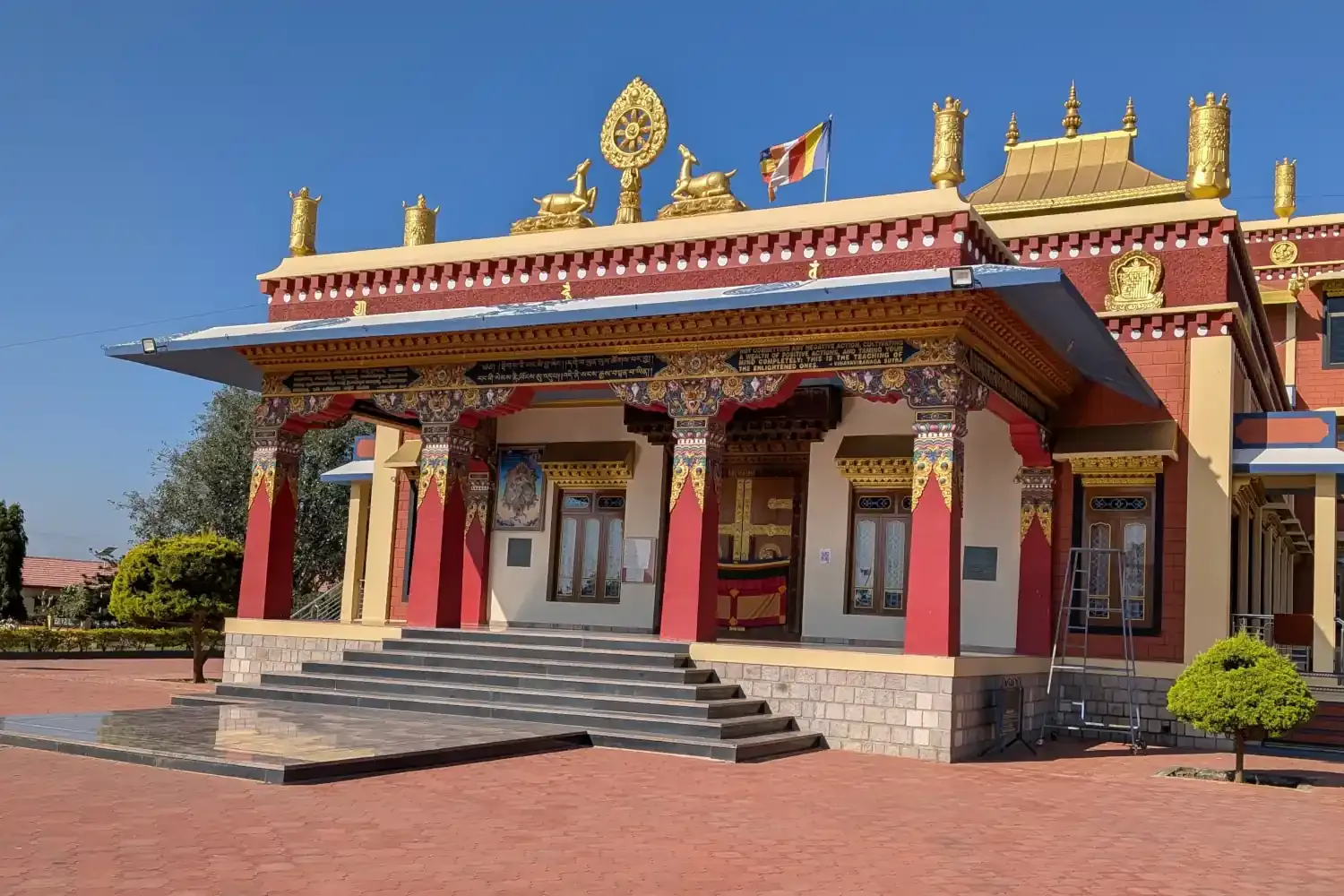
Spiritual practice is directly linked to the well-being of the wider world. Through the fully residential Dzongkar Choede Monastic School, the monastery provides holistic education, pastoral care, and shelter to children, many from vulnerable Himalayan border regions. Combining traditional studies with modern subjects prepares these students to pass on what they receive, and serves as a moral anchor for the global Tibetan diaspora.
Ecology & Simplicity
External simplicity shapes internal clarity. The monastery pursues sustainable living, prioritizing environmental mindfulness, thoughtful resource consumption, and a close relationship with the natural elements. A life oriented around shared sufficiency rather than material expansion models an alternative to a consumerist world that often confuses having more with being more.
Buddhism in a Changing World
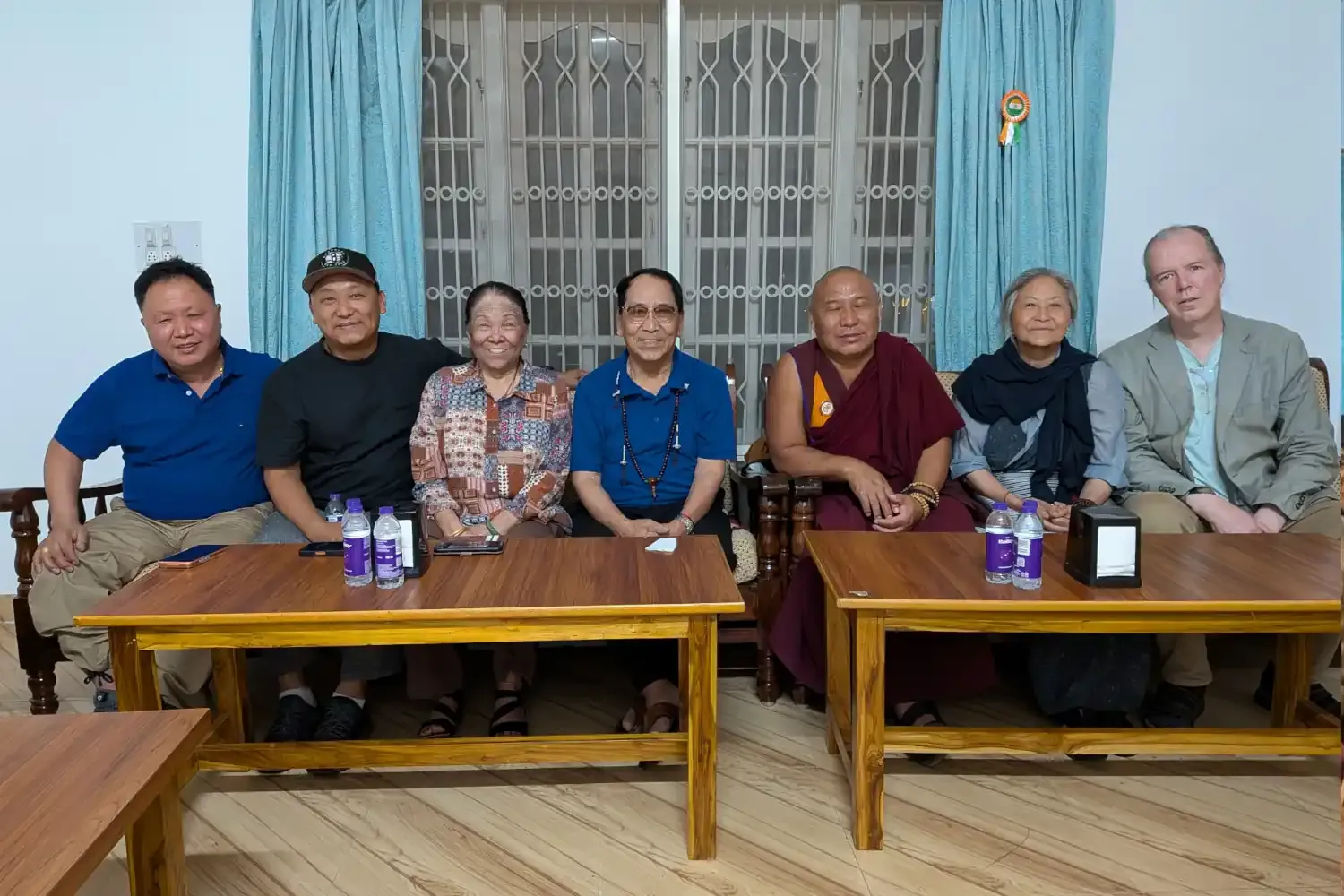
As the world enters the digital and post-AI era, the monastery takes up its civilizational responsibility. Technology serves as upāya — skillful means — for archival preservation and global outreach, while monastic control over the integrity of the lineage stays strict. The monastery offers a grounded, human voice in an age of automated cognition, and invites scientists, thinkers, and practitioners to explore what remains genuinely human when intelligence itself is externalized.
Stay Close to the Monastery
Receive occasional stories, teachings and glimpses of daily life from Dzongkar Choede. Occasional means occasional — a few times a year, when there is something worth sending.
If this resonates with you
The monastery has stood since 1270 and will quietly continue on its path. If something here speaks to you, consider making a contribution — and walking part of the way with us.
Support