

Buddhist philosophy is usually met in one of two ways: as a set of doctrines to be accepted, or as a vocabulary of untranslated words that seem to belong to someone else's world.
These pieces take a different route. Each begins from something most people will recognise without any instruction at all — the satisfaction that fades once you arrive, the argument replayed at three in the morning, the uneasy question of who exactly is doing the worrying — and works back from there to the idea that names it.
The concepts are the ones monks here spend twenty years examining. Nothing is asked of you but attention.

Tradition Meets the Future
24 August 2026
The Buddha never met social media or artificial intelligence, yet the forces in the human mind remain familiar — and technology amplifies them. A living tradition preserves what is valuable while learning to speak to new conditions.
more

17 August 2026
Meditation is not primarily a relaxation technique but a way of learning to see: thoughts are events that arise, remain briefly and disappear. We need not believe every thought simply because the mind produced it.
more

Buddhism, Desire and Simplicity
10 August 2026
Advertising depends on a simple idea: a dissatisfied person is more likely to buy something. Simplicity is not austerity but recognising what is enough — and the word “enough” can be surprisingly liberating.
more

3 August 2026
Giving a struggling friend whatever they ask may feel compassionate while strengthening the harm. Compassion and wisdom are the two wings of a bird: neither flies alone.
more

27 July 2026
Karma is not a cosmic reward system but simply intentional action and its consequences: walk the same route through grass and a path appears. It places responsibility in our hands without reducing life to judgement.
more

Attachment, Aversion and Ignorance
20 July 2026
An unpleasant email tightens the body, summons old grievances and drafts an angry reply within minutes. Attachment, aversion and ignorance are the forces turning a few sentences into an entire emotional world.
more
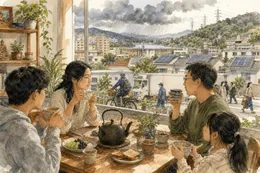
Understanding Interdependence
13 July 2026
An ordinary cup of tea required soil, rain, labour, reservoirs and electricity — countless people we will never meet. Nothing exists entirely by itself, and that changes how we see achievement, environment and each other.
more

The Buddhist Teaching of No Fixed Self
6 July 2026
We say “I” hundreds of times a day, but what exactly are we pointing to? Not the body, the thoughts or the memories, each of which keeps changing. A person is better understood as a process than as a permanent essence.
more
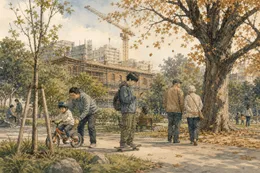
What Impermanence Really Means
29 June 2026
Everything arising from causes and conditions eventually changes — and much of our suffering comes from living as though this were not true. Because things change, transformation is also possible.
more

The Buddhist Understanding of Dukkha
22 June 2026
We imagine happiness lies just beyond the next achievement, and each time we arrive, the satisfaction fades. Dukkha names the friction between a changing world and a mind that asks it for permanence.
more
These texts are drafts, awaiting review by the monastery.