
The Guhyasamāja Self-Initiation
དཔལ་གསང་བ་འདུས་པ།
The 9th to the 15th day of the fourth Tibetan month; the Gregorian dates move each year.
What happens
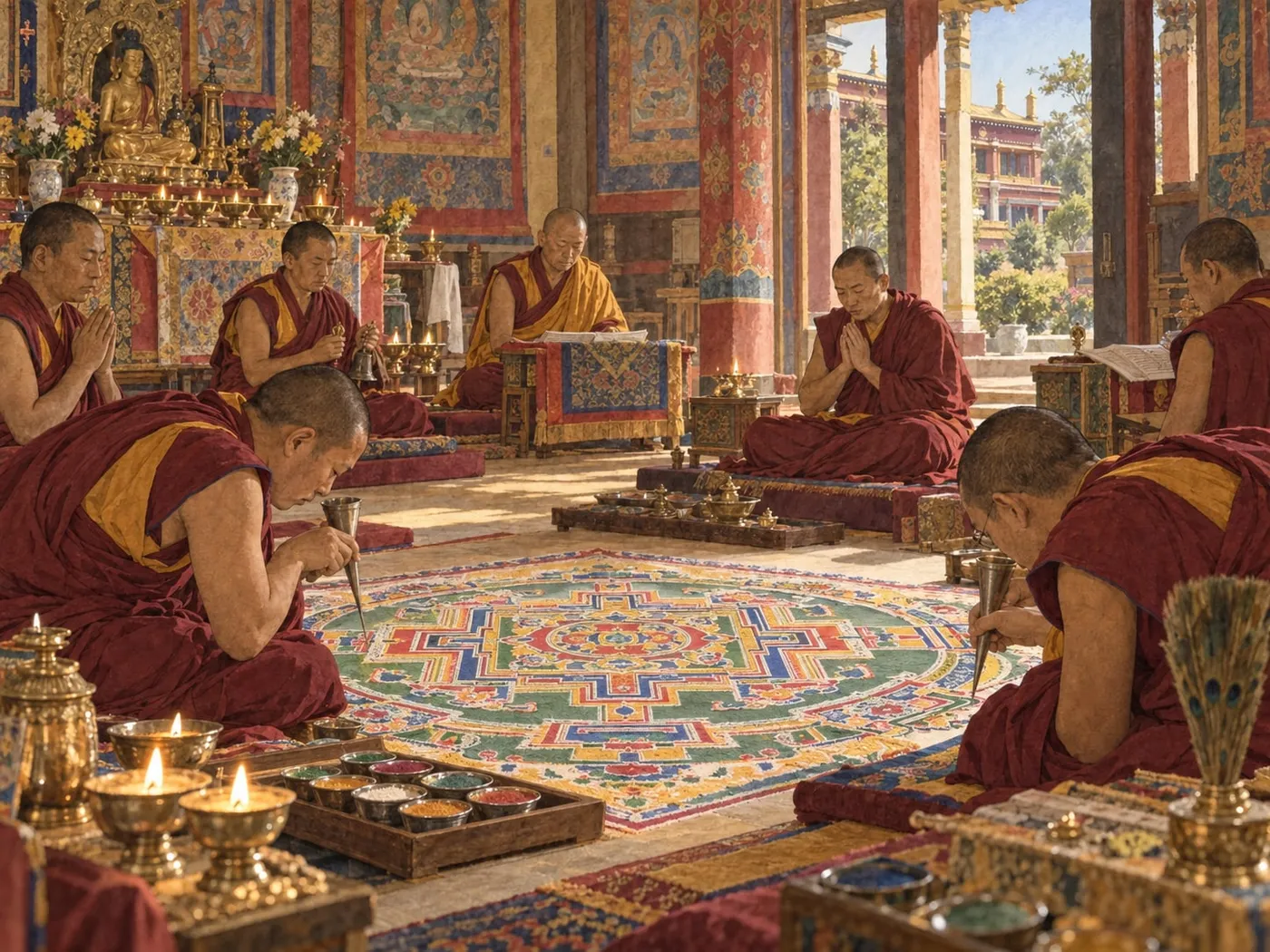
From the 9th to the 15th day of the fourth Tibetan month, the monastery performs the self-initiation ritual of Guhyasamāja on a sand mandala prepared for it. Seven days, one practice.
The mandala is built first — coloured sand laid grain by grain through metal funnels, the ground consecrated before a single grain is placed. What is being built is a palace: the residence of the deity, drawn in plan, with gates, courtyards and an occupant at the centre. It is a map of a state of mind, and the monks spend days making it.
Why it is done
Self-initiation is what it sounds like: a practitioner who has received an initiation from a teacher confers it on himself, to renew vows and repair whatever has lapsed since. It is maintenance of a commitment rather than a first entry into one.
Guhyasamāja — the “Secret Assembly” — is one of the three principal tantras of the Gelug tradition, alongside Cakrasaṃvara and Vajrabhairava, and is traditionally regarded as the most demanding of them philosophically. Tsongkhapa wrote extensively on it. A monk reaching this practice has generally spent twenty years on the philosophical curriculum first, and the two are not separate undertakings: the tantra assumes the understanding of emptiness that the Madhyamaka years were for.
Why a mandala of sand
The mandala could be painted, and permanent mandalas exist. Sand is chosen because of what happens at the end.
When the week is over the mandala is swept up — inward, to the centre, undoing every distinction the pattern made — and the sand is carried to running water and poured in. Days of work, dismantled in minutes, by the same people who made it.
That is not a postscript to the ritual. It is the argument the ritual is making, carried out rather than stated: that nothing assembled from parts stays assembled, including the practitioner.
Where it sits in the year
The monastery’s ritual calendar is dense, and this is one week of it. A second week-long self-initiation, of Vajra-Akshobhya, runs on a sand mandala in the ninth month. The Yamāntaka ritual in the tenth month commemorates Ganden Ngamchö and includes a day-long Cham. On the 29th of every month there is a day of Dharmapala ritual; on the 8th, Tārā; on the 10th and 25th, tsok offerings; on the last day of the month, Medicine Buddha.
Most of this is invisible to a visitor, and almost all of it happens whether anyone is watching or not.
This description is a draft, awaiting review by the monastery.
Playing this video loads it from YouTube, which may set cookies. Open on YouTube instead.